The Future of Collaboration: How Industry Consortia Are Redefining Competitive Advantage
In today’s hyper-connected, rapidly evolving innovation landscape, the old playbook of competition as a zero-sum game is being rewritten. Forward-looking organizations are embracing a new paradigm: collaboration as a strategic differentiator.
At the heart of this shift are industry consortia—neutral, mission-driven alliances that bring together government, industry, and academia to accelerate the development of critical technologies. As the nation’s largest and most experienced consortium management firm, ATI has seen firsthand how these ecosystems transform siloed innovation into scalable solutions.
Co-opetition is the New Competitive Edge
Consortia enable competitors to become collaborators in pursuit of shared outcomes. By creating secure, structured spaces for “co-opetition,” ATI-managed consortia reduce duplication, surface non-obvious partnerships, and speed time to deployment.
Real-World Proof
Take the DOTC/NAC collaboration: through ATI’s management, this armaments-focused consortium rapidly delivered new missile launch systems that are now defending U.S. Navy platforms. Or the BioMaP-Consortium, launched with BARDA, which onboarded nearly 100 members in its first 90 days to bolster the biomanufacturing supply chain.
Digital Infrastructure, Shared Intelligence
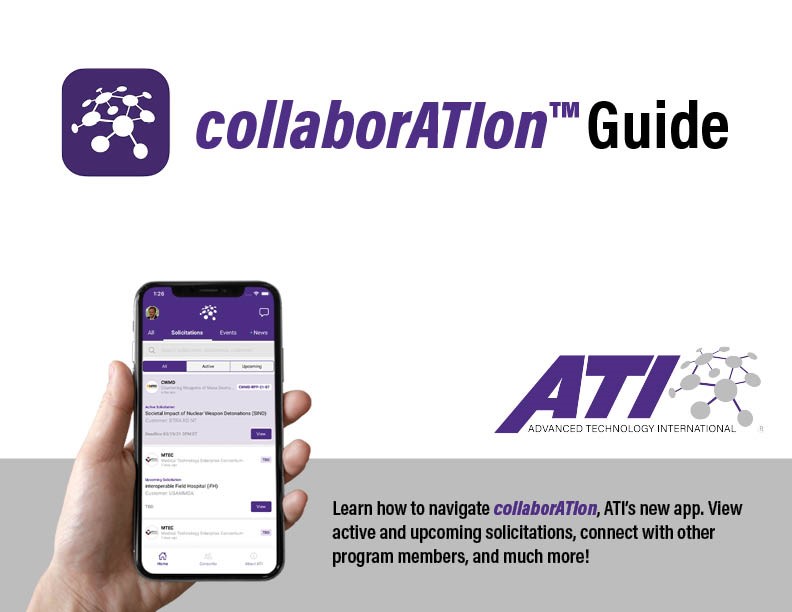
Modern collaboration thrives on data. ATI invests in secure platforms and digital workflows that allow members to share information, access solicitations, and manage projects with clarity and compliance.
Why It Matters
In an era of distributed innovation and national security urgency, speed and trust are currency. Consortia that are well-governed, technologically equipped, and mission-aligned are becoming essential engines of competitive advantage.
Continue Reading
Related Posts

Behind every high-performing consortium lies a strategic foundation built on trust, transparency, and well-calibrated governance.